We are currently having an epidemic of obesity. We are more sedentary than ever and eating more than we should. As a result, we are seeing a spike in obesity-related disease such as diabetes and high blood pressure.
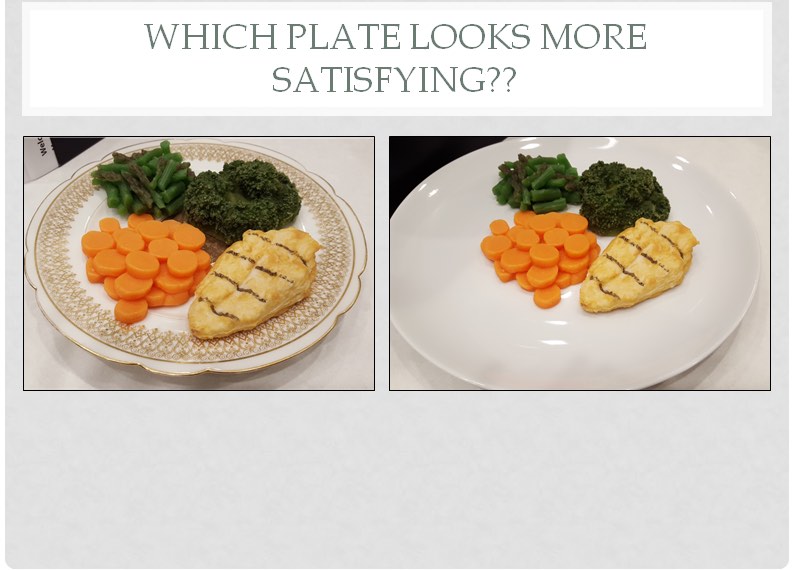
On a recent trip to an antique store, I found this beautiful plate from the 1800’s (pictured below left). At first I thought it was a salad plate which are generally smaller by today’s standards, but was told by the store owner that it was actually a dinner plate! This got me thinking that our dinner plates have been getting gradually larger. For comparison, you can see a modern dinner plate from my own cabinet (pictured on the right). I decided to do a little experiment. I put standard size portions of vegetables and meat (plastic models) on the antique plate. I showed this to a group of people and asked whether they thought they would be full after eating that plate. Most said it looked like a lot of food and yes they would be full. Next, I put the same food items on the large white plate from my kitchen and slightly off center and asked them the same question. Many said it looked like the food amount got smaller and that they would probably go for second or third helpings! Our minds can easily be fooled by the empty space on large plates.
Look at your own dishes and think about eating on smaller plates. Try eating your dinner on salad plates tonight. If you go to a cocktail party, use smaller dessert plates rather than large dinner plates. You may also want to purchase new dinner plates that have a decorative border which gives the appearance of a fuller plate. You may find yourself losing weight!
UPDATE!!! So, it’s over 2 months later since I started eating on the smaller sized plate at home every night. Even if I ordered prepared food, I would place the food onto the plate and leave any excess in the container. Believe it or not, I’ve lost 3 pounds so far! This was even without the intention of losing weight or being conscious of the food contents. I totally didn’t expect this weight loss and the only real variable I changed was the size of my plate. Try it yourself!
 Many diseases such as Zika, Malaria, Yellow Fever, West Nile Virus, and Dengue Fever are spread by mosquitos. The biting insects are found almost everywhere, but there are steps you can take to reduce your risk of being bitten. Here are some tips I recommend that you follow at home and traveling abroad.
- Remove standing water from your yard. Mosquito larvae can grow in small amounts of water, even as little as a bottle cap! Do a thorough cleaning of your yard and remove any standing water, such as bird baths, catch basins, or clogged gutters.
- Make sure your window and sliding door screens are intact. If there are holes, you should replace them immediately.
- Keep your skin covered when walking into wooded areas. My favorite fabric is linen because it covers your skin yet allows for good air circulation and keeps you cool. I also recommend tucking your pants into your socks to prevent the insects from crawling or flying into your pant legs.
- Mosquitos generally do not like air conditioning. Keeping your bedroom and house cool can prevent them from coming in.
- Avoid applying personal care products with fragrance. Mosquitos are attracted to scents such as perfumes. Even a strongly scented deodorant will attract them.
- If you will be outdoors, you can burn mosquito coils (a type of incense) or light citronella candles. Mosquitos do not like to be near smoke as it reminds them of a forest fire.
- Generally, most people get bitten at dawn and dusk periods, so be particularly careful if you are outdoors during these times. However, there are mosquitos that feed during the daytime as well.
- Use a repellant with at least 20% DEET on your skin. Avoid products containing 100% DEET on your skin as they can be quite irritating. I recommend using a spray called Deep Woods Off! Another handy DEET-containing product is REPEL wipes. These are great if you want to be discrete about your mosquito avoidance and not create a plume of chemicals which could be irritating to people nearby. They are also very convenient for travel because, unlike the spray bottles, they are TSA compliant for carrying onboard airplanes.
- If you will be outdoor extensively (hiking outdoors, outdoor picnic, etc.) you can should use Permethrin Spray on your clothing in addition to DEET on your skin. You can even spray the clothing the day before. Be sure to do this in a well ventilated area, preferably outdoors, and allow to dry. Do not spray permethrin on skin as this can cause irritation. A great idea is to spray a lightweight scarf or old T-shirt with permethrin and put it in a plastic bag so that if you do note that the mosquitos are biting, you can wrap up with it and be protected.
- If you are applying sunscreen and mosquito repellant spray, you should always apply the sunscreen first and then the mosquito repellant. Doing it in reverse can cause the sunscreen to slide off and become ineffective.
Protection is key to prevention of mosquito-borne diseases. Be prepared and you will not need to worry!
Most of us know our height and weight, but do you know your blood pressure numbers? I believe we should all know these two important numbers. You should be concerned about high blood pressure. It runs in families and can cause early heart disease (heart attacks), strokes, kidney failure, and blindness. As devastating as these conditions are, we often don’t feel when our blood pressure is high. That is why high blood pressure has the nickname, the “Silent Killer”.
I recommend starting with an annual physical with your primary care provider. He/she can take an accurate measurement of your blood pressure in both arms. The top number is called the “systolic blood pressure” which measures the pressure in your blood vessels during contraction (pumping) of the heart, while the bottom number is called the “diastolic blood pressure” which is the pressure when the heart has relaxed. I recommend that you write these numbers down or record them on your smartphone. Then, purchase a blood pressure monitor. I personally recommend the Omron blood pressure monitor with an upper arm (bicep) cuff as they are more accurate and generally not too expensive. These are automatic cuffs and do not require any more skill than pushing a button.
Here’s how to get an accurate measurement:
- Set up the blood pressure monitor on a kitchen table, with the cuff snugly around your upper arm.
- Sit quietly for 2 full minutes with both feet flat on the floor.
- Push the button with your other arm. Sit still and try not to move until the reading is done.
- The cuff should inflate and then deflate.
- Do not be tempted to recheck the blood pressure until 10 minutes later. Rechecking the blood pressure too soon can result in inaccurate measurements.
- Try to take your blood pressure in the same arm each time. Generally speaking, the blood pressure in the left arm will be slightly higher on average than the left since the heart sits closer to the left arm.
Here are some numbers and what they can mean. Generally, we look at blood pressure trends and not individual numbers.
Top number <100 or bottom number <60: Your blood pressure can be normal for you or too low. check with your medical provider to see if this could have an impact on your health or needs further workup. People with very low blood pressure can have fainting spells or light-headedness when they stand.
Top number 100-130 or bottom number 60-80: This is the ideal range for blood pressure. Make sure you maintain proper diet and exercise regularly to keep these numbers in range.
Top number 130-140 or bottom number 80-90: This is called “pre-hypertension” and you are at risk for developing full blown hypertension in the coming years. Medications are not usually indicated for this blood pressure range if you are otherwise healthy, but if you have a history of heart disease or diabetes your healthcare provider may start you on medications. Diet and exercise are extremely important to reverse pre-hypertension.
Top number 140-160 or bottom number 90-100: These are numbers consistent with true hypertension. You should make an appointment to see your healthcare provider to find out what medication you need to be on. Lifestyle changes such as daily exercise and low fat diet are also important. In fact, if you are able to lose weight, and truly live a healthy lifestyle, you may be able to maintain a good blood pressure and can stop the medications.
Top number >160 or bottom number >100: These are dangerously high blood pressures that need immediate attention. If you have these numbers and have any symptoms of chest pain, blurry vision or loss of vision, decreased urination, leg swelling, or headaches, you need to go to your nearest emergency room. Blood pressures that are in this range can result in serious life threatening problems. If you forgot to take your blood pressure medication, take them immediately. You will likely need to be given blood pressure medications through an IV at the hospital with close monitoring of your blood pressure and need some blood tests and an EKG to be done to make sure there is no damage to your heart.
Much of the East Coast is in the middle of one of the worst blizzards. These storms can cause damage to property and cars, but we often forget that they can adversely affect your health. Already the news reports have stated there have been 9 deaths so far. Most were from car accidents, but there were also a few heart attacks in people who were shoveling snow.
Here are some tips to keep you and your family safe during the storm.
- Make sure you have enough medications for you and your family’s chronic conditions (e.g. insulin for diabetics) to last for the the next 7 days
- If a medication requires cold storage, make sure to freeze some ice packs that you can place in a cooler
Collect clean tap water in pots and pans that you can use for drinking should the municipal water system be contaminated by the storm surge/runoff. Continue to drink only boiled water after the storm if needed.
Make a list of your medical conditions, names of all medications and doses. If you need to evacuate or need to go to a hospital for an injury, this information is important. If you have a heart condition, you should have a copy of your latest EKG (electrocardiogram). Keep these papers in a plastic waterproof sealable bag.
- Print out a list of phone numbers of family and friends. If you lose power, you may not be able to recharge your phone and access those numbers. This is especially important if you need to evacuate.
- Create a small bag filled with water, food (granola bars, nuts, etc), some cash and clean clothes should you need to evacuate. (remember, you may not be able to use ATM’s if the power goes out)
- Check on elderly relatives and neighbors. Elderly people are most vulnerable to dehydration. Make sure they have plenty of bottled water available.
- First aid kit. Have it accessible at all times. Fallen trees and flying debris can cause wounds that need immediate attention.
- Clear any clutter on the floors. If there is no electricity and it is dark, you have a chance of tripping on objects.
- Stock up on food that does not require refrigeration, such as soy milk, cereal, and bottled juices.
- Avoid going outside, even if you think the storm has passed. Be careful, downed power lines and falling tree branches can very dangerous. Stay off the roads!
- If you have a heart condition or are physically out of shape, do not shovel the snow. Leave it for someone else to do it. Snow can get very heavy and shoveling can be very taxing for your heart.
- Dress warmly. Better yet, put your warm clothes on about 10 minutes before going outdoors. This will allow your body to trap heat inside your clothing and keep you much warmer. Make sure all skin is covered with clothing. Wearing goggles or sunglasses can be helpful to keep sharp snow from scratching your eyes.
- Drink plenty of fluids. Cold air is dry air. You lose a lot of fluid just being cold and outdoors.
- Moisturize your skin. This is best done after showering to lock in moisture. Don’t forget your lips! Chapped lips can be feel very uncomfortable.
Stay safe and keep warm!
It’s definitely the common cold, bronchitis and flu season in most of the US now, with temperatures dipping below freezing. Most of these illnesses are caused by viruses. Antibiotics such as “Z-packs” or azithromycin help with bacterial infections, but not viral infections. In fact, they can even make viral infections worse. Here are some other reasons you should not ask your healthcare provider for antibiotics when you start having cold symptoms.
- Widespread use of antibiotics is leading to resistant bacteria. When you take an antibiotic for a viral illness, you may be creating resistant bacteria in your own body. These can then spread to your family members resulting in more difficult treatments and possibly hospitalization.
- Everyone has a mix of good and bad bacteria in their bodies. You may actually kill off your good bacteria unnecessarily and allow for bad bacteria to take over. One such “bad” bacteria called C. difficile can cause serious life-threatening diarrheal infections that can be deadly.
- Most colds and flus will go away on their own within a week. You can help improve how you feel by getting enough rest, staying hydrated, and taking over the counter medications for symptom relief.
- Antibiotics have side effects such as diarrhea, rash, abdominal pain, and some life threatening allergic reactions which could land you in a hospital or back at your primary care provider’s office. Many of these can be idiosyncratic, meaning you may have taken the antibiotic before and had no issues but you may develop side effects if you take the same antibiotic the next time.
- Antibiotics will not shorten the duration of a cold or flu. You may have been given a “Z-pack” by your health care provider before, but that may have been for different circumstances. Also, many healthcare providers feel pressured by patients to give them something for the visit, usually a prescription. Had the healthcare provider just given you a placebo (sugar pill) would you have gotten better just as fast? For the common cold caused by a virus, you probably would have!
- If you are otherwise healthy, avoiding your primary care provider’s office when you have a cold can prevent you from getting sicker. The doctor’s office waiting room is filled with people who may have contagious diseases. Save yourself the money on the co-pay and risk of exposing yourself to sicker people.
- There are better medications for cold and flu symptoms. If you need to find out more information, you should feel free to ask your healthcare professional.
- Antibiotics can have negative interactions with many medications and medical conditions. In particular, antibiotics reduce the effectiveness of birth control pills and patches, meaning women are more likely to get pregnant. Azithromycin, which is found in the “Z-pack” has been shown to cause fatal irregular beating of the heart as well, especially in people with heart disease or history of heart attacks.
- Antibiotics and the visit to see your healthcare provider can increase your medical costs especially if you have a high deductible plan. Save yourself some money and use the money on over the counter medications which will make you feel better.
- Allow your trained healthcare provider to make the correct assessment of you. All healthcare providers are trained to abide by the rule “do no harm”, when a provider determines that you do not need an antibiotic, respect his/her decision. You could even ask, “what symptoms should I look out for that would indicate I would eventually need an antibiotic” so you know when to call back if needed.