June 26th, 2017
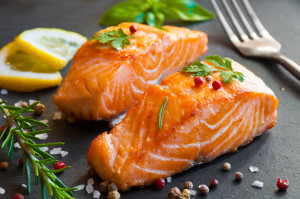 Right now, we are facing a crisis. The world’s oceans are warming up and many fish are dying off. We also have a booming human population that is turning to fish as an alternative to artery-clogging red meat. Fish is a valuable food source that can help to reduce heart disease, diabetes, and even arthritis. We all need to eat fish that is sustainable and healthy. This can be a daunting task since there are so many varieties of fish on menus today. I recently found an amazing website called the EDF Seafood Selector which can help you make environmentally conscious seafood options that also provide health benefits, even filtering down to criteria such as farm raised versus wild caught and which oceans the fish came from. It also lets you know how much mercury content is in each fish, which is very important if you are a woman who is planning to have a child or if you eat fish very often.
In general, fish that are predatory (eat smaller fish) and live longer and are larger (like Ahi tuna or swordfish) should be avoided as much as possible. Need more reasons to eat fish?
June 3rd, 2017
 A classmate of mine from residency training recently made an amazing series of videos on YouTube. Dr. Jamie Malcolm is a board-certified gastroenterologist and internist and he did an excellent job describing the causes and treatments of acid reflux.
Please click on the links below to access Dr. Malcom’s videos. I’m sure you’ll find them very informative!
May 29th, 2017
 We’ve all heard the expression “Rome wasn’t built in a day”. I believe this resonates with our health as well. Many studies have shown that quick fixes such as fad diets and even gastric bypass or gastric sleeve procedures (“stomach reduction surgery”) do not often show permanent changes. The human body seems to have a “set point” where it wants to be. When you deviate from that set point, as when you try to lose extreme amounts of weight, it secretes hormones that make you feel extreme hunger or maybe even depressed which resolve when you gain the weight back. Some of these hormones are secreted by fat cells that sense they are shrinking.
Think about a long term goal that you’ve had, maybe saving money to buy your first house, planning your wedding, graduating from college, etc. Could you do any of these in 3 weeks or less? how about six months? Probably not. We shouldn’t think we could get 100% healthy in these time frames either. Sure, if you restricted your calories and lived in the gym you could probably see dramatic weight loss (like you often see on those TV shows like “Biggest Loser”), but the weight will come back.
How can anyone become and stay healthy? Just like the analogy of saving to buy your first home, we should think small. Start with the smallest changes and go slow. The key is consistency and to keep motivated.
Here are some tips to get started:
- Set a SMART goal each week. This is something that is specific and measurable. For example, “The first week of June, I will eat one piece of fruit each day.” Avoid goals which are less specific such as “I want to eat more fruits and vegetables.”
- Plan ahead, think about what you will need to do to accomplish your goal and create contingency plans. In the example above with the fruit, perhaps you will need to go grocery shopping and buy 7 pieces of fruit every Sunday. What if you don’t have time to shop one week? Maybe you could keep frozen fruit such as bags of berries or peaches (BTW they are delicious) in your freezer that you could defrost and eat.
- Pick low hanging fruit. Avoid changes that disrupt your life too much. Going from a sedentary life to saying that you are going to workout daily can be a shock to your body. Maybe instead, you can add a 5 minute brisk walk each day. I know that you probably think 5 minutes is too little, but lets remember that 5 minutes a day x 7 days per week x 52 weeks per year, equals a heck of a lot of walking! Also, you may start off with 5 minutes, but perhaps in a few months, it will increase to 15 or 30 minutes when you lose weight and feel more energetic.
- Think about replacing not cutting out. If you are a diehard chocolate fan and eat it every day, cutting it out completely may seem like torture/punishment. However, maybe if you replaced it with non-fat chocolate pudding or sugar free hot chocolate, you can still satisfy your chocolate craving without all the excess calories.
- Pick a diet that works for you. I get this question all the time in my practice, “What’s the best diet to lose weight?” I say, it’s the diet that you fits in with your lifestyle, that you can maintain for the rest of your life, and that does not cause you to gain weight or increase your cholesterol/blood pressure. Everyone is unique and we are learning more and more that our bodies respond differently to the food we eat.
- Write it down. Each week, write your goal for the week down and place it on your desk to remind yourself.
- Recognize obstacles in your path. These can be situations or even people who will unknowingly throw you off. For example, if you decide your goal is to reduce your alcohol intake (alcohol is packed with calories, and can slow down your metabolism considerably), perhaps you can avoid cocktail parties or social events where the focus is on drinking. Perhaps replace those events with activities such as going to the movies with friends, or hiking in a park. Many studies have shown that people with obese friends have a high risk of becoming obese. The reverse is true. Why is this? As humans, we like to do things that others around us are doing, a sort of evolutionary peer pressure. So if your friends are getting ice cream, it would be difficult not to eat with them. Obviously, if your goal for that week was to avoid sweets, you may have a hard time at the ice cream shop! Recognize the challenge and find a way around it.
- Be creative. Think about ways you can achieve your weekly goals.
- Enjoy each little “win” and let that provide motivation for you to keep going. Perhaps, reward yourself in a healthy way! Take time to look back every so often and see how far you’ve come and how great you feel. In my own life, I’m shocked at how many changes in my life I have made over the years, from getting “hooked” on running to cutting out red meat, and to cutting back on my food portions to name a few. Again, these changes were over the course of years of continued improvement. “Slow and steady wins the race!”
May 21st, 2017
One of my biggest pet peeves is that we are not teaching our children health and wellness in schools like we should. How do I know this? I can’t tell you how many times I have seen young adults coming to me for common cold symptoms (cough, sneezing, fevers) for one or two days and have not taken any cold remedies from their local pharmacy or stayed home from school or work. It astounds me that they would feel it necessary to take time to see a physician for what is a typical cold without making an effort to try to make themselves better. I’m not surprised the healthcare system is burdened by unnecessary and wasteful medical expenses. Now, I will say there have been times when a cold becomes a pneumonia, but that is quite infrequent.
I suggest that instead of something like calculus (which I’m sure we all use in our daily lives!), we should be teaching our children mandatory courses on basic first aid, appropriate use of the healthcare system (do I need to go to the ER?), cost-effective use of the healthcare system (“should I go to the ER or urgent care or primary care provider?”), nutrition and sexual health. Imagine you bought an expensive car, wouldn’t you want to know how to deal with problems that come up so you don’t have to go to a mechanic each time your tires are a little low on air? Now think of your body as one of the most expensive cars, and you don’t get another one for the rest of your life! Isn’t information to keep your body going worth that much more than knowing the area under a parabola?
Given recent cuts to education budgets, I don’t think we’ll see a more comprehensive health education system anytime soon. My suggestion is that we all start at home. If you have children, don’t just give the lectures on the “birds and the bees”, tell them what they can do if they have a cold or the flu. Not sure what to do yourself? Ask your physician or your kids’ pediatrician to print out information sheets. I recommend the CDC website as a starting point as they have resources on many different topics and is easily searchable. I also recommend that everyone take a CPR class. Most libraries and community centers will have courses scheduled throughout the year.
April 30th, 2017
 We are learning more and more about nutrition and the impact of certain foods on our health. Recently, soda has been found to have negative effects on our health. Essentially, soda is high in sugar usually corn syrup (with the exception of diet sodas), carbonic and/or citric acid, and water.
Here are some of the negative effects that we know so far.
- Carbonation along with sugar leads to tooth decay and cavities. It can also erode dental enamel which can lead to tooth loss.
- Sugars, particularly corn derived sugars such as corn syrup, have been linked to obesity, metabolic syndrome, and diabetes.
- Acid reflux or silent reflux. Carbonated beverages, particularly when consumed ice cold can cause acid from the stomach to rise up into your esophagus causing gastroesophageal reflux disease (GERD) commonly called “heartburn”. You may also get a cough or worsening of asthma resulting from this.
- Caffeine induced insomnia. Some sodas contain massive amounts of caffeine, which can result in caffeine overdose symptoms such as insomnia, anxiety, palpitations, and irritability.
- Increases risk of stroke and dementia. A recent study published in STROKE with a huge population showed very convincing evidence linking the fizzy beverage with these deadly brain diseases. This association was also seen in diet sodas containing artificial sweeteners.
- Soda worsens conditions such as gout or kidney disease. Drinking soda can alter your blood pH, making it more acidic. Many medical conditions are worsened when your blood become more acidic.
- Soda can be addictive. Soda is available almost everywhere and sometimes in the case of movie theaters and convenience stores, can be found in huge cups. It is no surprise that people can become hooked and turn to soda when they should be drinking water. You would be surprised how much money you can save from cutting soda from your grocery bill.
What can you drink instead?
- Water. Simple, inexpensive, delicious
- Water infused with fruit. If you need a hint of flavor, place some fruit such as watermelon or cucumber in a pitcher and fill with filtered water and let it sit in the refrigerator overnight. The water will have a hint of fruit flavor, without sugar.
- Unsweetened tea. I can’t say enough about the benefits of tea. If you usually drink soda for the caffeine, this is a good replacement
- Coconut water is high in potassium with very little sugar. It quenches your thirst.
- Milk (soy, almond, cow, etc.) is very high in protein and calcium for building bones. Just be careful not to drink too much as it can be high in calories. For cow milk, drink skim or 1% milk as even 2% milk is still very high in fat (2% is actually a misnomer as it is not double the fat of 1%, but is actually much higher).

 Right now, we are facing a crisis. The world’s oceans are warming up and many fish are dying off. We also have a booming human population that is turning to fish as an alternative to artery-clogging red meat. Fish is a valuable food source that can help to reduce heart disease, diabetes, and even arthritis. We all need to eat fish that is sustainable and healthy. This can be a daunting task since there are so many varieties of fish on menus today. I recently found an amazing website called the EDF Seafood Selector which can help you make environmentally conscious seafood options that also provide health benefits, even filtering down to criteria such as farm raised versus wild caught and which oceans the fish came from. It also lets you know how much mercury content is in each fish, which is very important if you are a woman who is planning to have a child or if you eat fish very often.

