When I see a person, I see not just one living organism but one giant ecosystem composed of billions of different species most of the time co-existing together, but sometimes an “evil” one takes over and wreaks havoc. Doesn’t this sound like science fiction rather than medicine? More and more we are learning the bacteria in our intestines, skin, stomach and even arachnids (mites which are relatives to spiders) that live in our eyebrows can influence our health.
Not surprisingly, the pharmaceutical industry is creating and selling an increasing number of products that are meant to restore or maintain the populations of beneficial bacteria in our body. Scientists are not completely sure if this is the correct approach and the topic is debated hotly at conferences. On one hand, many people who suffer from IBS (irritable bowel syndrome) have noticed dramatic improvement with taking probiotics. However, many of the bacteria found in commercial probiotics are not actually common in humans. Acidophilus is one of the most common species of bacteria in probiotics, but it is more ubiquitous in yogurt not the human colon. So should we be populating our bodies with yogurt making bacteria? Perhaps, if this bacteria prevents “evil” bacteria such as C. dificile (which is notorious for causing a life-threatening diarrheal disease after any antibiotic use), I could see the probiotic as being beneficial. Ultimately, we don’t have a real answer.
Interestingly enough, if you look at foods around the world almost every single culture has a “probiotic” food. I believe this is no simple coincidence. When people eat foods that make them feel better, or anecdotally prevent or cure illness the knowledge gets passed along. Ultimately, this knowledge becomes tradition. Here are some probiotic foods from around the world. I recommend eating them regularly, as they are also usually quite delicious!
- Greek Yogurt (Greece and Middle East)- great source of calcium and full of lactobacillus/acidophilus
- Kefir (Middle East)- a yogurt drink made from cow milk and grains, similar in probiotic profile to yogurt
- Miso Soup/Paste (Japan)- fermented soy beans create this umami-rich paste that is commonly made into a soup
- Sauerkraut (Germany)- fermented cabbage, great source of fiber as well
- Kim Chi (Korea)- spicy, preserved bok choy which can also inhibit growth of bad bacteria
- Dark Chocolate (South America)- while this may not actually contain bacteria, the good bacteria in our intestines thrive on dark chocolate and multiply faster.
- Kombucha (Japan)- this fermented tea is filled with Saccharomyces bacteria
- Gochujang (Korea)- a spicy condiment made from fermented chilis, rice and soybeans
- Natto (Japan)- fermented strongly flavored sticky soybeans, a very acquired taste!
- Cheese (Europe)- some cheeses are more probiotic than others, typically the more pungent ones such as gouda, parmesan, and blue cheese contain more beneficial bacteria.
- Fruit Chutney (India)- a staple condiment with most Indian dishes, chutneys add a touch of sweetness to your meal and many bacteria to your gut.
- Harissa (Africa)- a seasoning paste of mildly fermented chilis.
- Tempeh (Indonesia)- fermented soy product that is often used in place of meat, sometimes called “mock meat”, also rich in protein and fiber.
- Pickles (Europe/USA/Asia)- this picnic favorite should be a regular addition to your diet. It has no fat, no carbs, can be stored for a long time in the fridge and tastes great.
- Sourdough Bread (USA)- the “yeasty” flavor is a sign that it contains plenty of healthy bacteria.
- Dosa (India)- a giant crepe-like pancake made from fermented rice and lentils often served with savory ingredients.
- Pickled Herring/Fish (Scandinavia)- an easy way to get protein, probiotics, healthy fish oils and vitamin D!
- Lassi (India)- a fermented dairy drink often incorporated into fruit shakes (e.g. mango lassi).
- Poi (Polynesia)- a purple root vegetable that is often pounded into a paste and allowed to ferment before eating
- Fish Sauce/Nuoc Mam (Asia)- made from fermented anchovies, adds a very distinct pungent flavor to any dish.

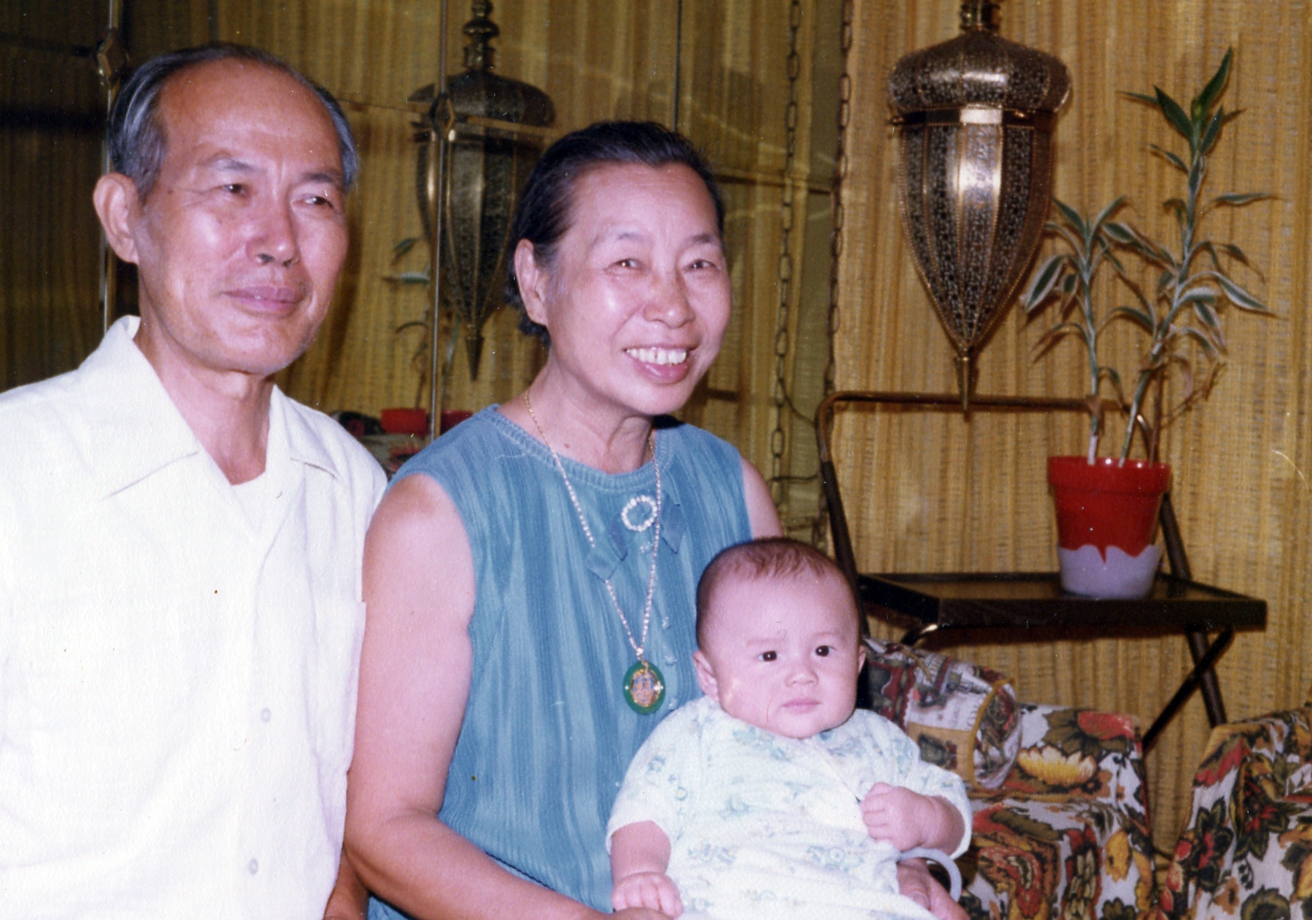
Mr. Jen Yin Chiu, Dr. Kao Mei Chiu, and a very young Dr. Edward Chiu
I find it amusing that many people are turning to the “Paleo” diet for improved health and longevity. Ironically, the people who lived in the “Paleo” age died at the average age of 25! Granted they also had to deal with infections, the elements and animals trying to eat them.
My grandfather lived to be 101 years old. I think it is much more logical to model my diet on what he ate to be healthy! Let me tell you a little about him. Mr. Jen Yin Chiu worked as a farmer and painted oil paintings as a hobby. He got up early in the morning, and went to bed early each night. He drank at least 4 large mugfuls of oolong tea each day. He did 10 minutes of stretching every morning when he woke up, kind of a mix between tai chi and yoga with deep breathing exercises. Throughout his life, he rarely ate processed foods having grown up in a farming village where fresh vegetables and fruits were always plentiful.
When I am trying a new food, I think to myself “would my grandfather recognize this as food?” If the answer is “no” I avoid it. A good example is cereal that comes in multicolored ring shapes. Sure, the ingredients list things like wheat and corn, but if my grandfather saw fluorescent colored donuts that stain the milk a rainbow color, he probably would think this is a bowl of plastic beads. No good. The same goes with soda. He only drank tea and water. In general, anything that is overly processed would be out. Anything that grows on a farm with the fewest steps between the field and your plate would be ok.
I suggest that rather than “fad diets”, try to avoid packaged foods. When shopping at the grocery store, shop around the perimeter of the store, which includes the meat section, dairy case, and vegetables. Avoid the inner aisles where there are packaged and processed foods galore. The only exception would be the aisle with beans and whole grains. Read the ingredients on food labels. If you can’t pronounce words like “sodium caseinate, disodium inosinate, maltodextrin, disodium guanylate” which I recently saw on a bag of orange colored, triangular shaped corn chips, I recommend you don’t eat it!
My grandfather never stepped foot in a gym to do workouts, but he did get plenty of exercise daily. Most people burned more calories in previous generations during their daily routine. Why? Well, when my grandfather wanted to write a letter to a friend, he would write the letter out by hand and walk it to the post office 20 minutes away. Today, we could sit at the kitchen counter and click “send” and the email is sent. When my grandmother washed clothes, she did them by hand. I estimate she probably burned a good 200-300 calories washing clothes for every half hour of laundry by hand every few days. Today, when I do laundry, I burn zero calories as I just throw them in the machine and press start. I’m not saying we should all be doing our laundry by hand again, but this means we MUST get some form of exercise in our day and not just sit at our desks, in our cars or on the couch for over 12 hours a day (and that’s not an exaggeration!).
To make things worse for us, our food portions are getting way out of control. We are easily consuming 2-3 times the amount of calories that our grandparents ate and the fat content of our food is higher than ever. Not convinced? Check out the size of your dinner plate.
Currently, we are on course to a looming health catastrophe. Already we are seeing Type 2 Diabetes emerge in children (Type 2 Diabetes usually does not appear until adulthood and is associated with obesity). We are eating more calories than ever and burning less calories because of technological advances. Healthy eating and regular exercise should be incorporated into everyone’s daily life. If you have children, you should teach them healthy habits from the start. Get them off the sofa, perhaps exercise together as a family.
 According to the CDC, we are in the middle of this year’s flu season with many states reporting record numbers of flu cases. The good news is that the flu vaccine is well matched to the flu strains that are spreading around. Essentially, this means if you get the flu shot you will have better protection with this year’s formulation. The bad news is that this is predicted to be a pretty bad flu season because the predominant flu strain is an H3 subtype, which often leads to more hospitalizations and death than other strains.
Protect yourself and your family! Get your flu shot today. Fortunately, the flu vaccine is in plentiful supply and is available at medical offices and pharmacies. For 2 weeks after getting the flu shot, be sure to stay away from anyone who has the flu. The flu vaccine is effective starting 2 weeks after you get the shot. The pain of the shot is well worth the risk of having to stay in bed for a week or more! Need more reasons, here are a list of 7 reasons!
 The New York Times reported today in an article titled, “No New Local Zika Transmissions in Florida, Governor Says” that there have been no signs of Zika infected mosquitos in Florida. This is great news, as the concern for Zika especially among pregnant women or couples planning pregnancy has caused many cancelled trips to the Sunshine State. The current thinking is that the drop in temperature and the mosquito killing efforts have prevented the Aedes aegypti mosquito from reproducing. However, we shouldn’t start celebrating yet. Zika will likely still be a problem next summer. Because Florida has many visitor from South America and the Caribbean, which still have a significant amount of infections, the virus may return when the mosquitos start reproducing in large numbers again.
If you live in Florida, particularly Miami, it is important to drain any areas around your home of any standing water. Mosquitos can breed in as water as small as a bottle cap. Everyone needs to do what they can to help prevent the Zika virus from coming back and every little bit counts!
 You just had your physical exam with your primary care provider. He/she says you need to raise your “good” cholesterol. But wait, isn’t all cholesterol “bad”? HDL or high density lipoprotein is actually a beneficial form of cholesterol. Higher than average levels can neutralize LDL or low density lipoprotein, which is the main culprit in atherosclerosis (hardening of arteries) which in turn lead to heart attacks and strokes.
Here are some effective tips to raise your HDL and keep your blood vessels healthy:
- If you still smoke, stop smoking! There are MANY reasons to stop smoking. This is probably one of the most important. Smoking lowers HDL significantly. Even one cigarette or cigar a week has a negative impact.
- Exercise at least 30 minutes per day, 5 days a week. I recommend doing “Cardio” (ever wonder why we call it cardio? because it’s good for the heart!). Typically, you should get close to your target heart rate during any exercise you do, roughly (220- your age= target heart rate). So that slow walk to the grocery store may not count towards your 30 minutes per day!
- Eat fish 3 times per week. I recommend eating oily fish such as salmon, sea bass, trout, sardines, and tuna. You do want to make sure that the fish you eat are also low in mercury. Tuna should be eaten sparingly.
- Add flax or chia seeds to your oatmeal, yogurt, or salads. They add a nutty taste similar to poppy seeds or sesame seeds, but will boost your HDL. I recommend a tablespoon of each per day.
- If you drink alcohol, drink one glass of red wine per day.
- Lose weight. If you are overweight or obese, try to get to your BMI (Body Mass Index) goal.
- Use olive oil or canola oil in your foods. The Mediterranean diet recommends 4 tablespoons of extra virgin olive oil per day. Add some olive oil to your salads.
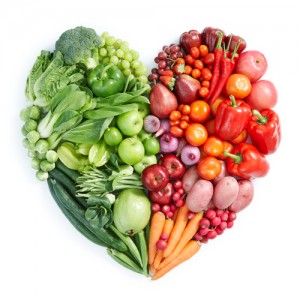
- Increase your fruit and vegetable intake. The type of fiber that is found in these foods acts like a sponge in your digestive tract and can help remove any cholesterol that you may have eaten. The recommendation is a minimum of 5 servings total of fruits or vegetables each day. One serving is about the size of your closed fist. I would recommend minimizing the fruits that are highest in sugars such as mangoes, bananas, grapes, and figs. Of course if you are choosing between eating a juicy ripe mango vs. eating a cupcake, I would say the mango would be a delicious and healthier choice!