Earth day is a time we acknowledge the state of our environment and what we can do to improve it, but it should also be a time that we think about our own health and well being. These are mutually concepts as pollution in our environment has a direct impact on our health. Here are some ways I recommend to mark this day.
- Plant herbs. This is so simple, buy some pots, soil and seeds. I like planting basil or cilantro. Any windowsill provides adequate sunlight. By growing your own herbs without pesticides and fertilizer, you are helping the environment. Fresh herbs are also great additions to your diet as they contain many nutrients and add a amazing flavors to your food. If you have high blood pressure, herbs can be a replacement for excess salt.
- Buy sustainable and locally grown produce. Think this is expensive? They are actually usually just as expensive, but often tastier since they do not need to be shipped from other countries and are picked from the fields when they are ripe. Know what fruits and vegetables are in season. Out of season fruits are almost always grown abroad.
- Compost your waste. Find out where you can drop off your coffee grounds, fruit peels, and other organic matter. A simple Google search can help you. Better yet, if you have the space, create a compost pile in your yard which will turn into free fertilizer for you garden!
- Take mass transit or ride a bike. Mass transit is often less expensive and has a smaller carbon footprint than driving a car. As an added health benefit, you often will have to climb stairs and take more steps walking to the station. You burn more calories! It’s a win-win situation for you and the earth.
- Avoid packaged or processed foods. A box of cookies or a microwave dinner require a lot of plastic and paper which lead to destruction of the environment. These food items also contain a lot of preservatives, processed sugars and chemicals that can be toxic to your body. Make these items yourself or go to a local small business which makes food fresh and without carcinogens. Trust me, a freshly baked cookie always tastes better than anything that comes out of a box that has been sitting on the grocery store shelf for six months!
- Avoid wasting food. Buy only what you need and freeze any leftovers. Food wasted is not only costly for you, but also the environment.
- Do not discard medications down the toilet. There have been some studies that have found trace amounts of antidepressants and antibiotics in lakes and streams. If you have any leftover pills, bring them to your pharmacist or your doctor’s office for safe disposal.
- Use cleaning supplies that do not contain harmful chemicals. Vinegar, baking soda, glycerin soap and plain water are often just as effective as the harsh chemicals we often use to clean, which can often cause chemical irritation to our noses and skin. Don’t pollute your home!
I love reading medical mysteries in the New York Times Magazine on Sunday. Each of them usually starts off with a person with some vague symptoms; they visit several doctors usually a primary care physician and multiple specialists. They get a battery of blood tests, imaging such as CT scans or MRI’s. Then at some point, they may be given a diagnosis and treated, but the initial treatment doesn’t work. Other treatments are tried, but they also fail. Ultimately, they get cured by some physician who thought out of the box and found the “zebra” (medical jargon for an extremely rare disease that eludes most other doctors, in contrast to the “horse” which is commonplace). It’s like a Sherlock Holmes mystery or episode of “House” and utterly fascinating to me.
What I find even more amazing about these stories is that the protagonist is often a patient who feels like something is wrong, yet all tests come back negative for any definitive diagnosis. This persistent and inquisitive person is unwilling to accept that their condition does not have a name and does not have a treatment, despite multiple medical professionals who tell them it may all be just “in their head”, yet they persist and are brave to say that something is definitely not right.
I believe we all have an ability to detect subtle changes in our body, but many times we ignore these signals or discount them. These may not be classic “symptoms” found in a medical school textbook, as every person is unique, but they are just as valuable for diagnosis and proper treatment. For example, before I develop a full blown cold, my ears start to get red and warm. When this happens, I immediately take steps to build up my immune system and may do a sinus rinse or drink ginger tea. I think it’s very important to get to know and understand your body’s unique way of speaking to you. It’s kind of like when you play poker and the other player has a weird habit or tic (called a “tell”) that they do when they’re bluffing. You can use this knowledge to your advantage…
I tell my patients all the time to listen to their bodies. Get to know the subtleties. Are you feeling slightly dizzy or off balance, could your blood sugar low? Are your eyes burning, could your blood pressure high? Is your appetite suddenly gone, maybe you are getting a viral intestinal infection (stomach flu)? Learn to trust these messages. These are unique to you and can be helpful to leading you to wellness. I can’t tell you how many times I’ve worked with patients who come in week after week with a new medical issue often times completely separated by organ system or body part (e.g. arm pain one week and toe pain the next week). Sometimes this can drag on for over a few months, but I tell them their body is telling them something isn’t all right and we need to continue finding the solution. Ultimately, we often do find an answer or the problems resolve themselves.
If you do find yourself in one of these situations, I would recommend keeping a journal. Input your symptoms and any related aspects. For example, people with celiac disease (inability to digest gluten properly) can be diagnosed earlier if they keep a food and symptom journal. Oftentimes, it’s difficult to recall these associations during your appointment with your medical provider. A journal helps to visualize recurring trends and patterns over long periods of time. One time, I had a patient who developed two weeks of allergic skin reactions (hives) but during our intake and discussion, we couldn’t identify any particular trigger. After keeping a diary for two months, she identified that the reactions occurred only after drinking a certain brand of soy milk and exercising afterwards. Interestingly enough, she didn’t have the reaction if she exercised only or drank a different brand of soy milk! After avoiding this brand of soy milk or just not exercising after the brand that caused the reaction previously, she noticed she was fine. Journals that include lab tests are also helpful if you need to see another provider or specialist so they can pick up where the other left off.
Listen to your body, learn to understand it’s language, and trust your instincts! No one knows your body better than you!
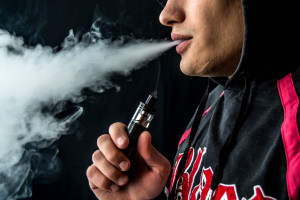 E-cigarettes (“e-cigs”) and “vaping” are becoming more common place. There are currently several different manufacturers with different devices ranging from some that look like cigarettes to others that look like flashlights. Almost all contain some form of liquid nicotine and come in a wide variety of flavors. Unfortunately, there is no current government regulation of these devices and the chemicals that are added so we aren’t sure of what other chemicals and toxins are added.
For the past three decades, we have seen a dramatic decline of tobacco products in the US. Public health announcements and government taxation of tobacco products have made tobacco “uncool” among the youth. However, this trend is changing for the worse. Many health experts who specialize in tobacco addiction see e-cigarettes as a gateway drug back to traditional cigarettes. Studies have shown that most e-cigarette users also smoke regular cigarettes. The selection of endless seemingly fun flavorings such as chocolate and pineapple added to e-cigs is also hitting a chord with the young population. What they don’t know is that the nicotine lurking behind that flavoring is ensnaring their minds and leading them to addiction.
What are the dangers? Honestly, we don’t know since e-cigs have not been around long enough for us to see what happens. Also, we have not even learned about what chemicals are even in them since they vary so much between manufacturers. Could they be harmful? We know the dangers of nicotine and the direct relation to lung cancer. The fact that e-cigs contain nicotine is automatically a bad indicator. There have been other dangers that have been reported from emergency rooms across the US. Some of these devices have exploded during use causing severe burns to the mouth and face. The cartridges or vials containing fluid used to refill the e-cigs have also been found to be tempting to toddlers and young children. They smell the fruit of candy flavors and bright packaging and think it is some type of juice or soda. Sadly, there have been cases of life-threatening nicotine poisoning among children who ingest the liquid.
The BOTTOM line: Don’t smoke e-cigarettes and don’t allow your children to start! If you or your loved ones are smoking, find out ways to quit through nicotine replacement, counseling, and medication. E-cigs are not a safe substitute!
If you’ve watched the news any day in the past few months, you’d think we have an epidemic of opioid addiction. Sadly this is all too true. Over 30,000 people have lost their lives each year from opiate overdoses. Many of them were using pills or patches that were at one time prescribed in a medical office. Those who become hooked on opiates are not all “poor and uneducated” as most people assume. This disease knows no boundaries and has touched many peoples lives often hidden behind closed doors or as closely held family secrets. Scientists believe there are some people who are more sensitive and vulnerable to opiate addiction, but we haven’t found a good way to identify those individuals yet. Some people can take them and be perfectly fine, but others can become hooked within a matter of weeks. Opiates also increase healthcare costs, even aside from overdoses. The side effects can even be severe enough to require hospitalization. Isn’t that shocking, that a drug initially prescribed to treat pain can lead you back to the hospital in worse shape?
How did we get to this point? Well, for a long time medical professionals including myself were trained to treat pain at any cost. We were taught that a patient in pain was considered a failure on behalf of the provider. By prescribing opiates, medical providers felt they were using a highly effective pain medication. However, it turns out opiates are unnecessarily strong for most types of pain and the risk of addiction or the pills falling into the wrong hands was far greater than the benefit.
Here are some tips to protect yourself and your family.
- Just say “No”. If your medical provider offers to prescribe opiates (oxycodone, tylenol #3, percocet, percodan, just to name a few), ask for other alternatives that are not addictive. If you have not maxed out on tylenol (acetaminophen) which is used at a maximum dose at 2000mg or naprosyn (Aleve) or ibuprophen (Advil, Motrin), try using those first. You could also ask your healthcare provider to prescribe a few days worth of opiates (maybe 5-10 tablets) just in case your pain worsens and take them only if you absolutely need it. If you need more, you can call them back later.
- Assess your pain. We usually gage pain on a scale of 0 to 10 where 0 is no pain, and 10 is “severe” pain (crying or doubled over in pain). Opiates should never be given for any pain less than 7 on the scale. If you have not tried acetaminophen or NSAIDS (naprosyn or ibuprophen) or both in combination, you should try these first. Consider other ways of treating pain. An ice pack or heating pad can dull the pain of a sore knee or back. I also love using Bengay patches or Biofreeze gel. Acupuncture, massage, and biofeedback are also helpful for certain types of pain.
- Do not ask for opiates. You may have had surgery in the past and opiates helped for the pain afterwards. Now you have “really bad” knee pain, and think back to your last experience. You think, “Hey, if it worked for me very well then, maybe I should try that first.” Don’t use this logic, assess each painful experience separately. Again, consider trying tylenol first. Maybe that’ll be enough. Opiates are “big guns” and should be reserved for intense pain after all other medications have been tried.
- Dispose of unused medications appropriately. Many studies about addiction show that addicts get their first try of opiates by raiding their parent’s medicine cabinet. We all have unused medications in our cabinet. Take a look today and put all the pills into a bag. Bring them to your local pharmacy or medical office and ask to dispose of them. Every pharmacy is required to provide safe disposal of medications with a “no questions asked” policy. DO NOT throw pills down the toilet, doing so can pollute the groundwater and introduce dangerous chemicals into the food chain.
- If you must take opiates, be aware of the side effects. They can make you drowsy and give you a drunk feeling. You absolutely cannot drive afterwards! You can also feel nauseous and vomit. I had a patient who told me she couldn’t stop vomiting for 24 hours after taking one oxycodone and it was so severe that she even had to go to the emergency room to get IV fluids. Lastly, constipation is very common. You must take laxatives of some type if you do end up taking opiates. If you do not have a bowel movement for more than 2 days, you must seek medical attention as this can lead to severe backup of wastes in your intestines, at times this can require surgery to cut open the intestines. Not an easy surgery, and infections are common. Do not combine opiates with alcohol or other medications such as benzodiazepines (xanax, clonopin, valium, just to name a few). This can lead to deep coma or your lungs to stop working.
- Teach your children the dangers of these medications. Opiates are highly addictive and can create permanent damage to a developing brain. If you suspect your child may be addicted, seek professional help immediately through your local health center.
Our world is filled with germs just waiting to get us sick. Here are some tips I recommend to reduce your risk of getting sick and getting other sick.
- Take off your shoes before you enter your home. Many studies have shown that bacteria, including dangerous ones such as C. difficile (known for causing severe chronic diarrhea), can be tracked in on the soles of your shoes. The surfaces of the streets in your neighborhood are covered in bacteria from animal wastes and people.
- Wash your hands or use hand sanitizer AFTER touching a restaurant menu. Almost all menus are handled hundreds of times each day, but are rarely washed appropriately.
- Avoid touching your face excessively. Most germs will not harm us unless we introduce them to “points of entry” such as our mouths, nose, and eyes. If you must touch your face (to scratch an itch), use a tissue.
- Wipe down the airline seat, tray table, belt buckle, and arm rests. When I was a kid, I remember clearly waiting at the gate for the plane trip. People would come off the plane and the gate attendant would announce that before we could board, the plane needed to be cleaned, which would usually take 20 minutes. Nowadays, you hardly ever see this. Instead, just after the last person trickles off the plane, they announce boarding. They do NOT clean planes regularly. In fact, on a recent plane trip I found a magazine that was 3 months old in the seat back pocket! I imagine that the seat may have not been fully cleaned for that amount of time! How many people’s germs have accumulated in those seats during that time? I’m always amazed at how the antibacterial wipe (I prefer WetOnes) starts off white and after I clean, ends up being dark grey or brown!
- Cough into your elbow. We used to tell people to cough/sneeze into your hands, but this can transmit germs easier since we use our hands to open doors, prepare food, and shake hands.
- Keep your nails trimmed and clean. A multitude of bacteria including Stapholococcus aureus (notorious for “Staph” skin infections) can live in the tiny space under the fingernails. When you scratch yourself, this bacteria can become enter into the skin. I find an old toothbrush and antibacterial hand soap are great for cleaning under the nails.
- Do a sinus rinse. The nose and sinuses are common entry points for viruses and bacteria. Sinus rinsing is akin to brushing your teeth. I do it every day, or if I feel like I have been around a lot of sick people, I will do an additional rinse at the end of the day. Make sure you use sterilized water and change the sinus rinse bottle every 3 months!
- Wash your hands the proper way. Start with lukewarm water, use enough soap to create a lather, rub every surface especially the fingertips. You should be able to sing the “Happy Birthday” song twice for effective cleaning. Many studies have shown that any soap is effective and specific “antibacterial” soap is not necessary. Thoroughly dry off your hands.
- Do not share food too often. Many times, we share drinks or food with others. We usually know to avoid doing this when someone is obviously sick (has a cough, sore throat, cold sore, etc.) Unfortunately, a lot of times we can transmit viruses during the “prodrome” phase of an infection when we feel perfectly fine. If you eat “family style”, be sure to have a separate spoon to portion the food onto your own plate.
- Clean your phone often and avoid touching other people’s phones. We are inseparable from our phones and hold them near and dear all day. They can accumulate germs from the foods we eat and sometimes even fecal bacteria from the bathroom (I won’t say how that happens, but use your imagination!). I will often use the antibacterial WetOnes to clean off my phone.
- Clean your jewelry. Rings and bracelets can accumulate germs and fungi. You can use hot soapy water and a toothbrush to clean them off.